From Willpower
to a System
How someone who was never that excited about exercise ended up turning body change into a long-running experiment in action, feedback, and self-awareness—all because of one small thought: “I guess I’ll give it a try.”
Start reading ↓

I actually caught myself thinking,
“Why is this person drinking water already?”
Later, during another 5K in Corona Park, I reached the first water station and saw some runners stop for water. My first reaction was honestly:
“It’s only a 5K. You’re stopping for water already?”
I even thought: if you really need water, shouldn’t you at least make it to the second station?
Then, a few steps later, it hit me.
Wait. Wasn’t I exactly that person half a year earlier?
Back then, even a 5K felt hard. Every water station looked like an oasis in the desert. Water? Great. A reason to stop? Even better.
And now, somehow, I had already become the guy quietly judging people for stopping too early.
The moment I realized that, I had to laugh at myself.
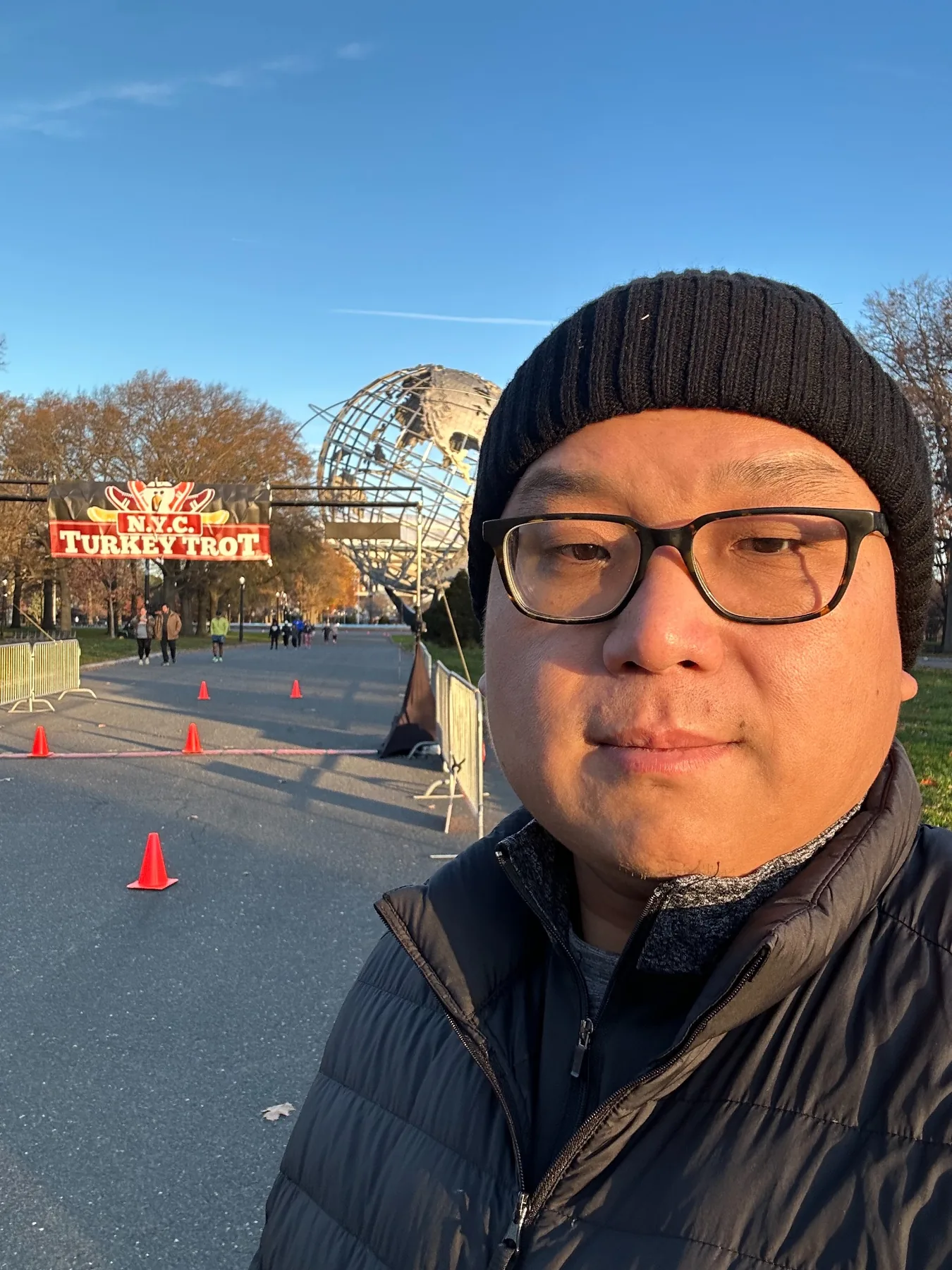
Don’t spend all your time comparing yourself to other people. Comparing yourself to your old self is already plenty of work.
A lot of change happens before you fully notice it.
Sometimes you only realize how far you’ve come when you catch yourself quietly judging the person you used to be: oh—apparently I’m already here now.
250 pounds, and one simple thought:
“I guess I’ll give it a try.”
In 2022, a friend asked whether I wanted to try dragon boat. I said no.
In 2023, he asked again. There was no movie soundtrack, no grand awakening—just one quiet thought: I probably can’t keep not exercising forever. Fine. I’ll give it a try.
So I went.
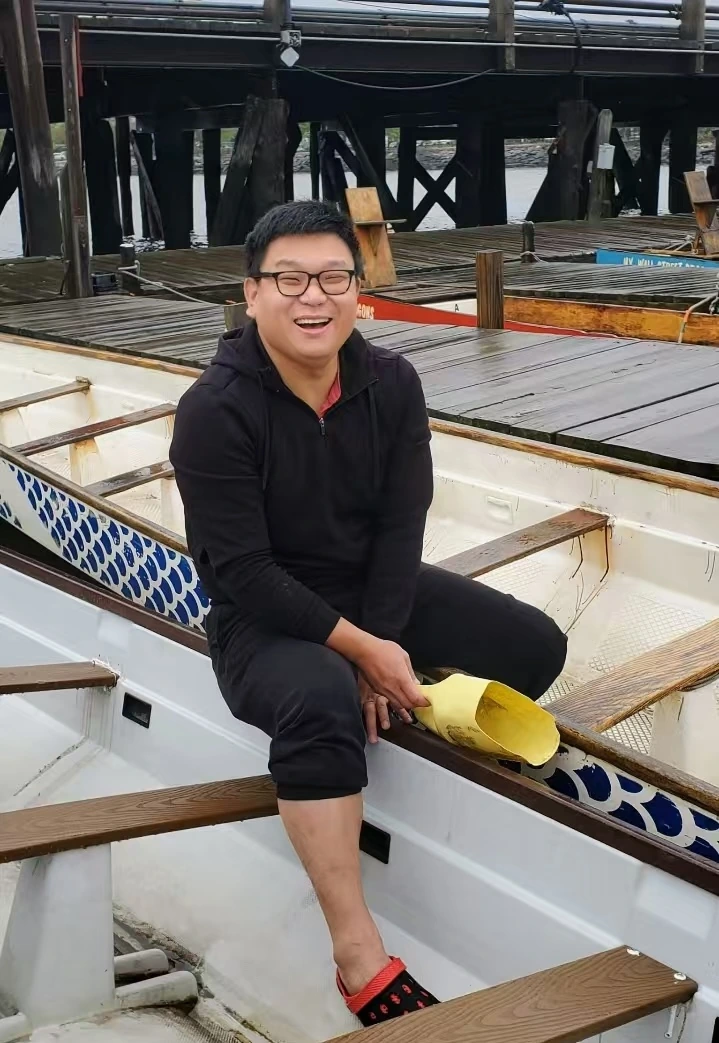
The first practice was exactly what a non-athletic person imagines when hearing the word “exercise”: exhausting, hot, and painful in several body parts I hadn’t thought about in years.
Everyone else knew to bring water. I didn’t. I got on the boat and realized: great, I have no water.
Even better, I was too embarrassed to tell people. So my first dragon-boat session became a complete premium package of:
heat + hard exercise + thirst + mild social awkwardness.
If I had rated the user experience, it would not have received five stars.
But I had already said yes, so I went back. Then I went a third time. Eventually, I finished the entire season.
That’s why I like that boat-cleaning photo now. It isn’t glamorous. It isn’t a race finish or a medal shot. I’m just in the boat doing work. But that’s usually what the beginning of change looks like.
You just show up first.
Looking back, this may have been one of the first things I learned: you do not need a complete system before you begin.
Show up first. Let reality tell you what comes next.
Dragon boat ended.
So what was I supposed to do in winter?
After that first dragon-boat season, I faced a practical problem: dragon boat would come back next year. What should I do in the meantime?
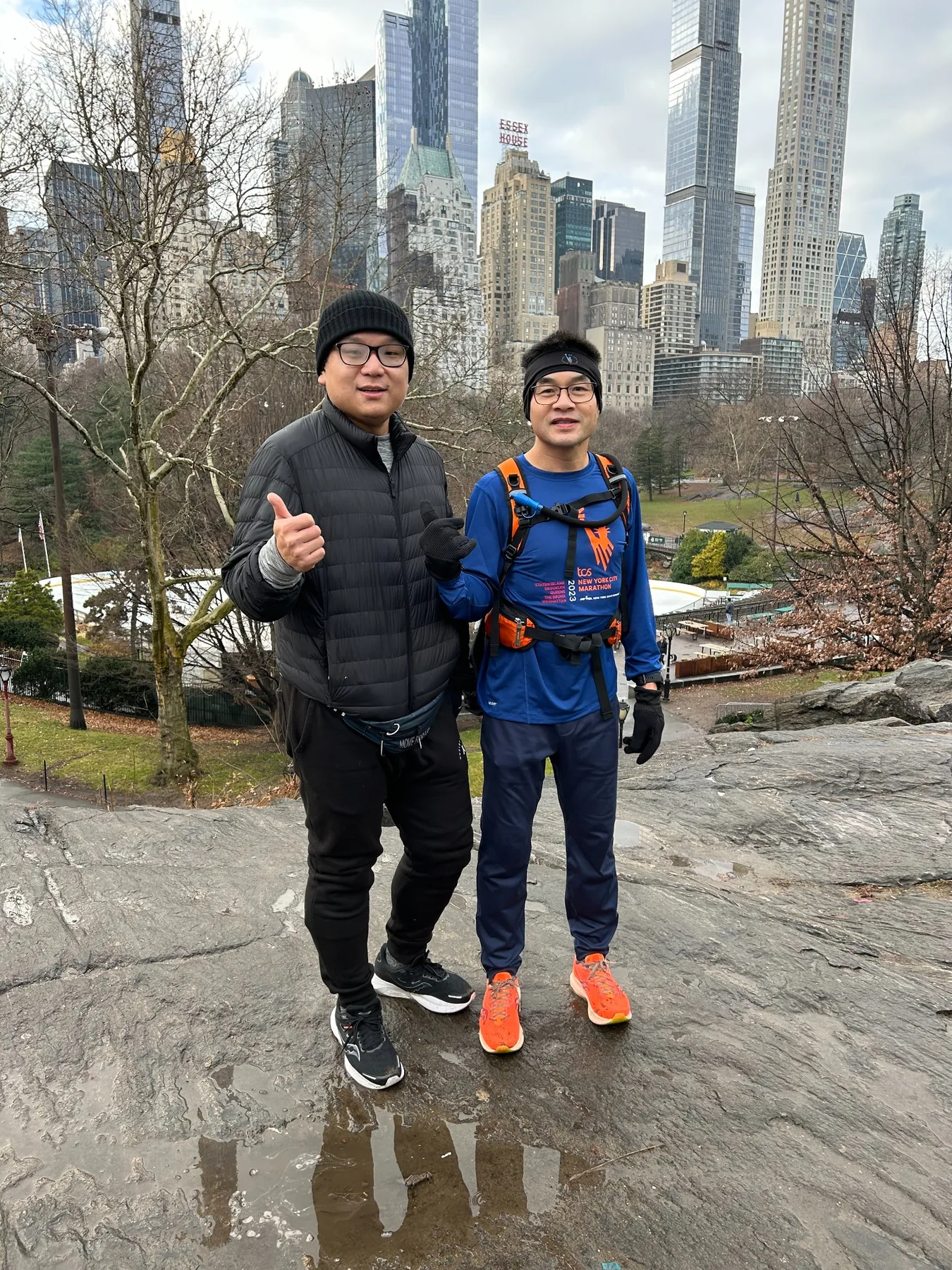
The friend who got me into dragon boat was a marathon runner. He told me, “You should run.”
I still didn’t love the idea. So I negotiated with reality and came up with a compromise: don’t run yet—just walk.
Walk for half an hour. If I didn’t want to continue, go home. Wait a day or two and walk again.
Later I realized I could listen to audiobooks while walking. Suddenly the deal became much better: one hour, exercise plus books.
Eventually I started running a little. Then a little more. My friend told me: “Slow is fine. Even if you’re barely faster than walking, it’s fine. Just keep running.”
So I worked on running a 5K without walking, then a 10K, then farther.
Looking back, I do not think consistency means forcing yourself to go hard every day.
Most of the time it means finding a version you can still do today. If you cannot run, walk. If walking works, run a little.
My own judgment
wasn’t as reliable as I thought.
On January 1, 2024, I was invited to run a route shaped like a dragon. When I saw the distance, my first reaction was: no, I can’t do that.
My friend said, “If you can’t finish, you can’t finish. Just run as much as you can.”
So I went anyway.
Moving time: 4:10:10. Average pace: 13:35/mi.
Today that looks slow. That day, speed was not the point.
The point was this: my brain said, “You can’t run that far.”
Strava said: you just ran 18.42 miles.
When the two sides disagreed, I decided I should probably trust reality a little more.
That lesson mattered more to me than the 18.42 miles itself. It was not “believe hard enough and anything is possible.”
It was simpler: my judgment is still only a judgment. Sometimes reality deserves more weight than the limit I assumed in advance.
13.1 miles
first had to become a fact.
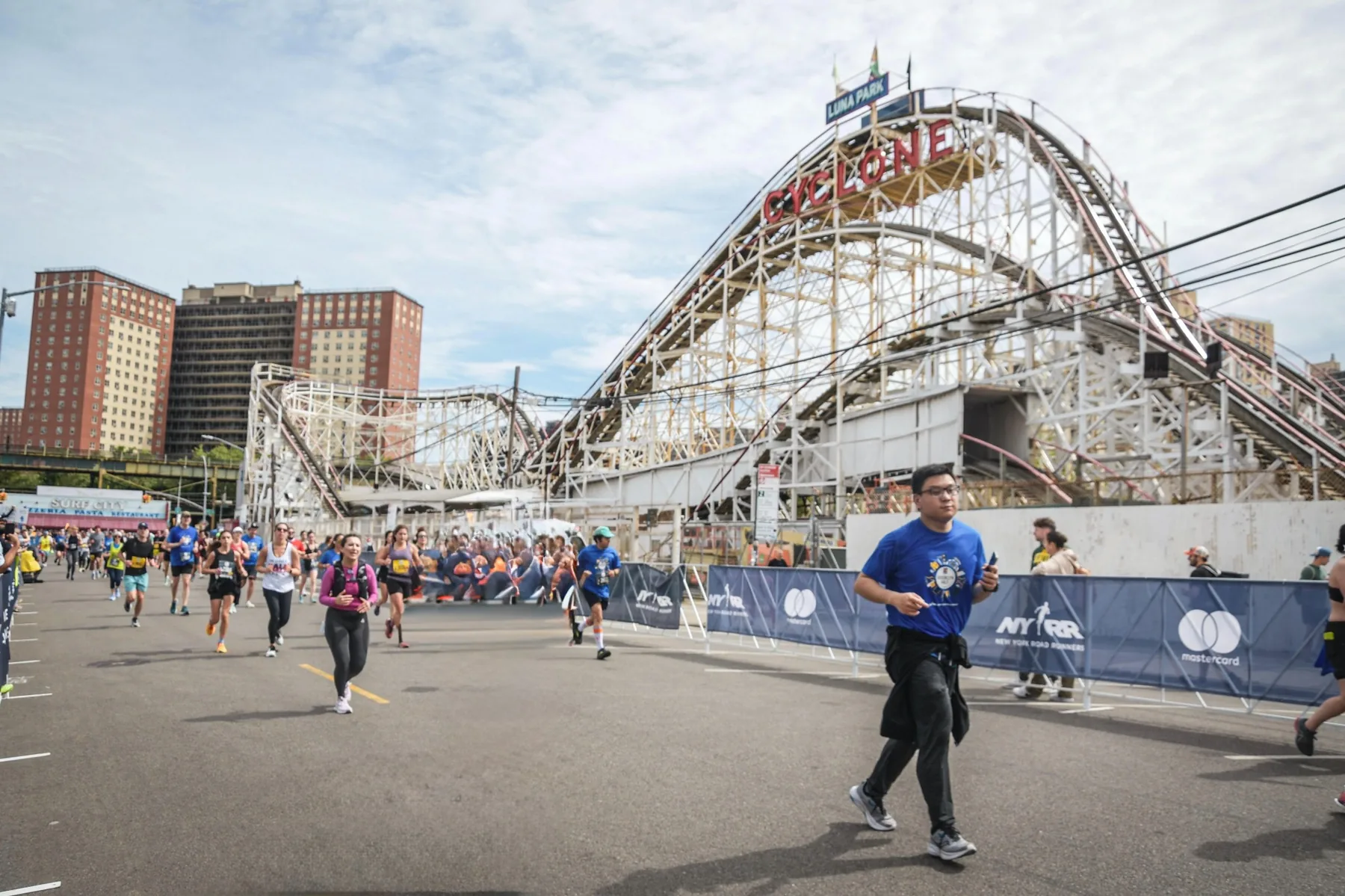
On May 18, 2024, I finished my first official half marathon: the Brooklyn Half, in 2:18:06.
My legs were not happy afterward. Even going downstairs felt like a negotiation. But I was happy because 13.1 miles had finally moved from “Can I do it?” to “I’ve done it.”
Two years later, at the same Brooklyn Half, I ran 1:43:19.
That was the shift. The question slowly changed from Can I finish? to How well can I finish?
A lot of “limits” change character once you cross them for the first time.
They stop being imagination and become a fact. Only then do you get to ask the next question.
Sport stopped being
just about losing weight.
Dragon boat continued. Running continued. And little by little, trying new things became a habit in itself.
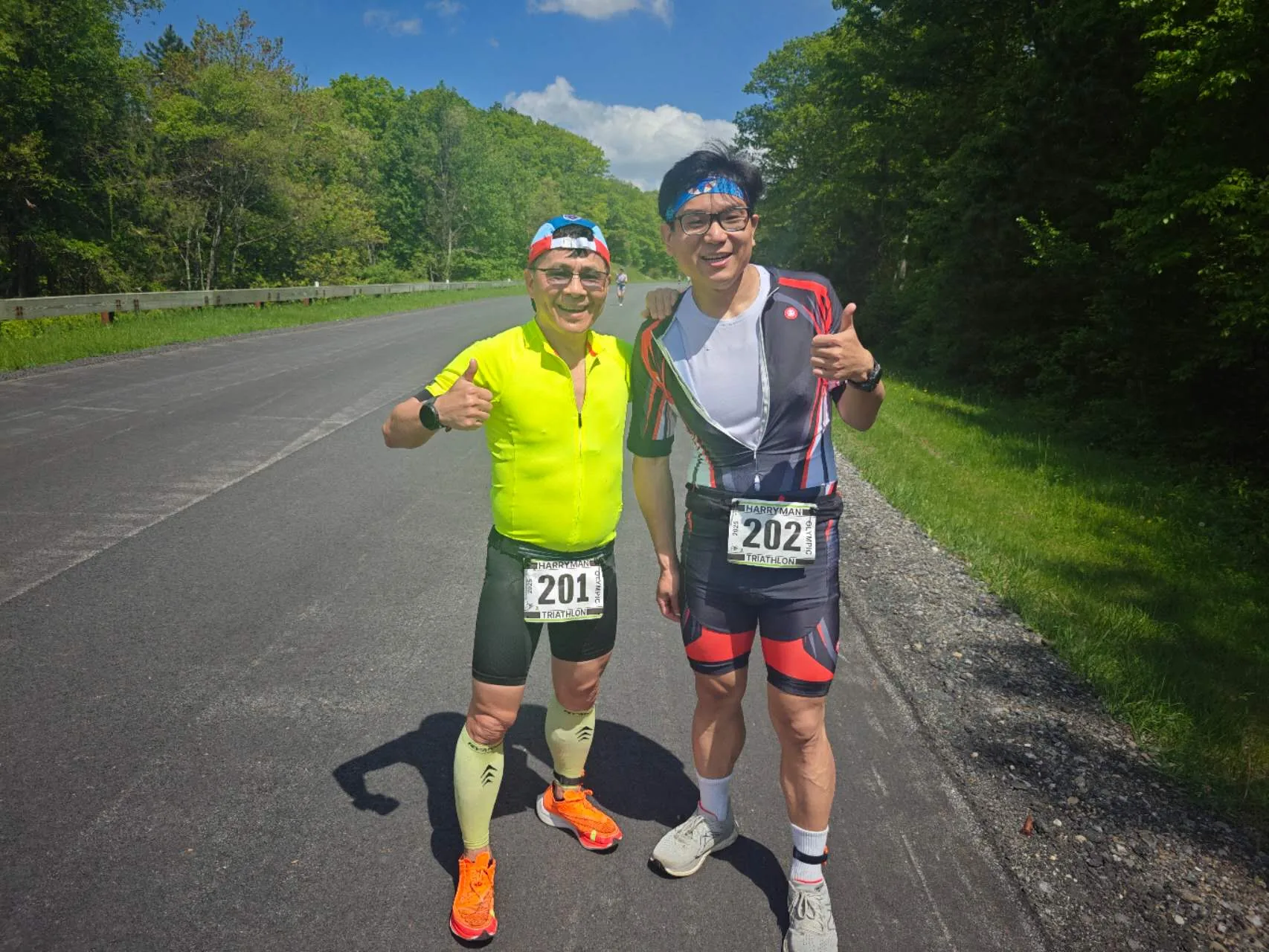
In May 2025, I did my first triathlon. The reason wasn’t especially noble. It was basically: well, I’ve already come this far—why not try something new?
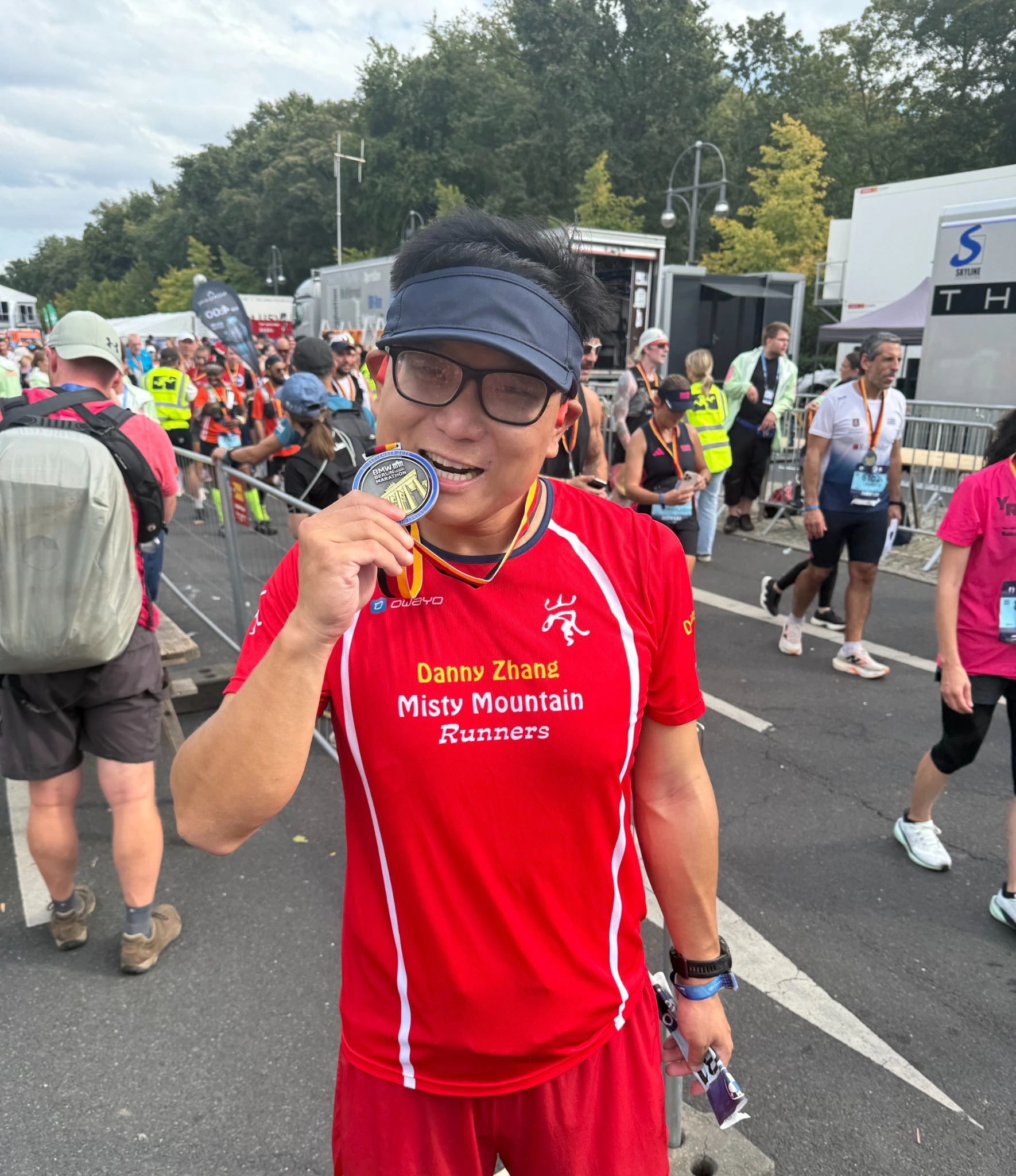
Berlin was hot. I didn’t run well. 4:24, no PR.
A few years earlier I would have obsessed over that. Why didn’t I run better? What went wrong?
Later I became more relaxed about it. If I didn’t run well, then I didn’t run well.
Some races are for PRs. Some are there to teach you a lesson. And some mostly exist so you can take a photo, go home, and keep training.
All of those are valid.
Over time, I stopped treating every result as a final judgment on myself.
One race is one race. A good result is feedback. A bad result is feedback too.
The only real question is: does the next step need to change because of it?
The scale basically said:
“Nope.”
After coming down from nearly 250 pounds, I had already lost a lot of weight. But around the low 200s and high 190s, progress slowed down and eventually stalled.
My earlier method was simple: eat a bit less, move a bit more. When you start from a larger base, that can work very well.
The problem was that once progress slowed, I had no precision.
What exactly is “a bit less”? What exactly is “a bit more”?
I didn’t know.
I could only go by vibe: I probably didn’t eat much today. I probably ran a decent amount. I should probably be losing weight.
The scale said: no, not really.
That was when I first seriously wondered whether the problem was not lack of effort, but lack of clarity.
That became an important shift. My old instinct when something stopped working was usually: try harder.
Later I started asking a different question: do I actually know what the problem is?
I only wanted to lose weight.
I ended up building a small dashboard.
In 2026, I stopped asking, “Which fat-loss method is best?” and started asking: what are the core variables that actually drive long-term body weight change?
16:8, keto, and low carb can all be methods, but long-term energy balance doesn’t disappear just because the branding is nicer.
If I wanted to know my calorie balance, I first had to know how much I was eating. So I bought a food scale.
Then a slightly strange version of me appeared: one food scale at home, one at work. Other people opened their lunch boxes. I opened lunch and started weighing things.
My coworkers probably looked at me and thought: is this guy eating lunch, or running a field experiment?
The system gradually became more complete:
The system worked. But the data also told me something else: before the injury, my deficit was often too aggressive, and sleep was consistently one of the weakest parts of the whole setup.
At first I only asked: “Why am I not getting leaner?”
Later I started asking:
“Am I maybe getting leaner a little too aggressively?”
Measurement doesn’t only help you push harder. Sometimes it helps you realize that you should push less.
If a lot of my earlier progress came from persistence, this was where I started to see that persistence alone was not enough.
Do → look at the result → ask why → adjust → do it again.
That loop turned out to be more useful than simply telling myself to “keep pushing.”
Then reality
changed the script.
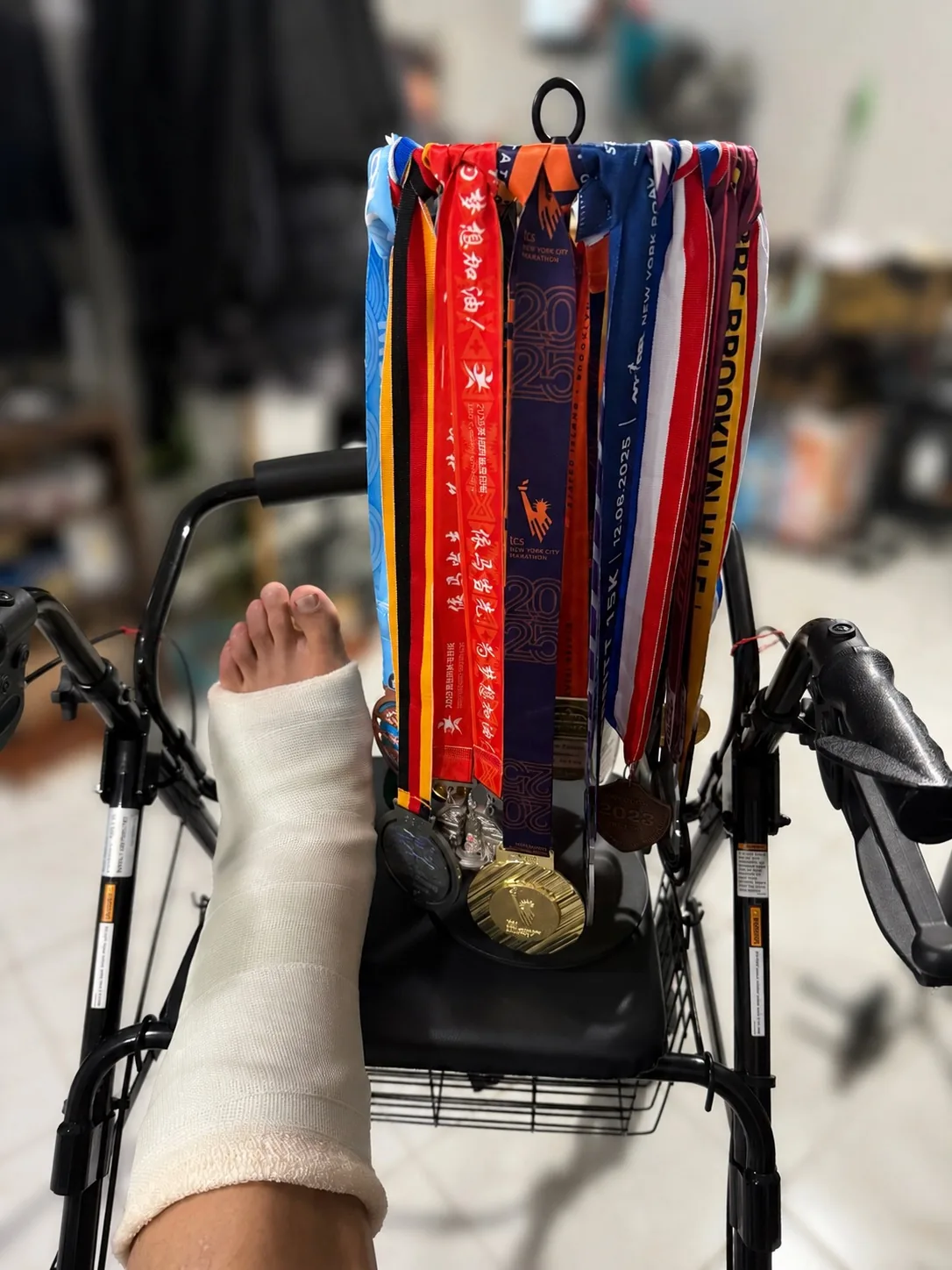
Just as the system was working smoothly, I injured my leg, got a cast, and couldn’t run.
If my whole “fat-loss system” had really meant “run a lot every day + huge calorie deficit,” then that injury should have broken everything immediately.
But the goal didn’t change. The conditions changed.
So the method had to change.
No running. Switch to upper-body strength work. By September, the average deficit had come down to about 264 calories per day—far below many pre-injury days. Protein stayed high. Recovery moved to the front.
The goal is not the method. If a system only works when everything is going perfectly, it isn’t much of a system.
The injury made one thing much clearer: the thing worth protecting was not any single method.
Running is not the system. A food scale is not the system. A particular diet is not the system either.
A real system should be able to change when reality changes.
The most interesting part
was that the change eventually spread outward.
In 2024, I encouraged Lin and Emile to try dragon boat. They liked it and kept going.
Later I encouraged Lin to run, and she completed her first half marathon. Michelle also started taking running more seriously and is preparing for the NYC Marathon this year.
After Berlin, I went back to China. My parents saw the changes from the past few years. They don’t need to run marathons. Starting with walking is already great.
My coworkers watched me weigh food every day and started paying more attention to what they were eating too.
None of those achievements belong to me. What other people accomplish is theirs.
At most, I provided one visible example.
I have grown to like that idea more and more.
Influencing someone does not always require standing in front of them explaining step one, step two, and step three.
Sometimes you just live your own life in a visible way.
If someone else looks at it and thinks, “Maybe I could try that too,” that may already be enough.
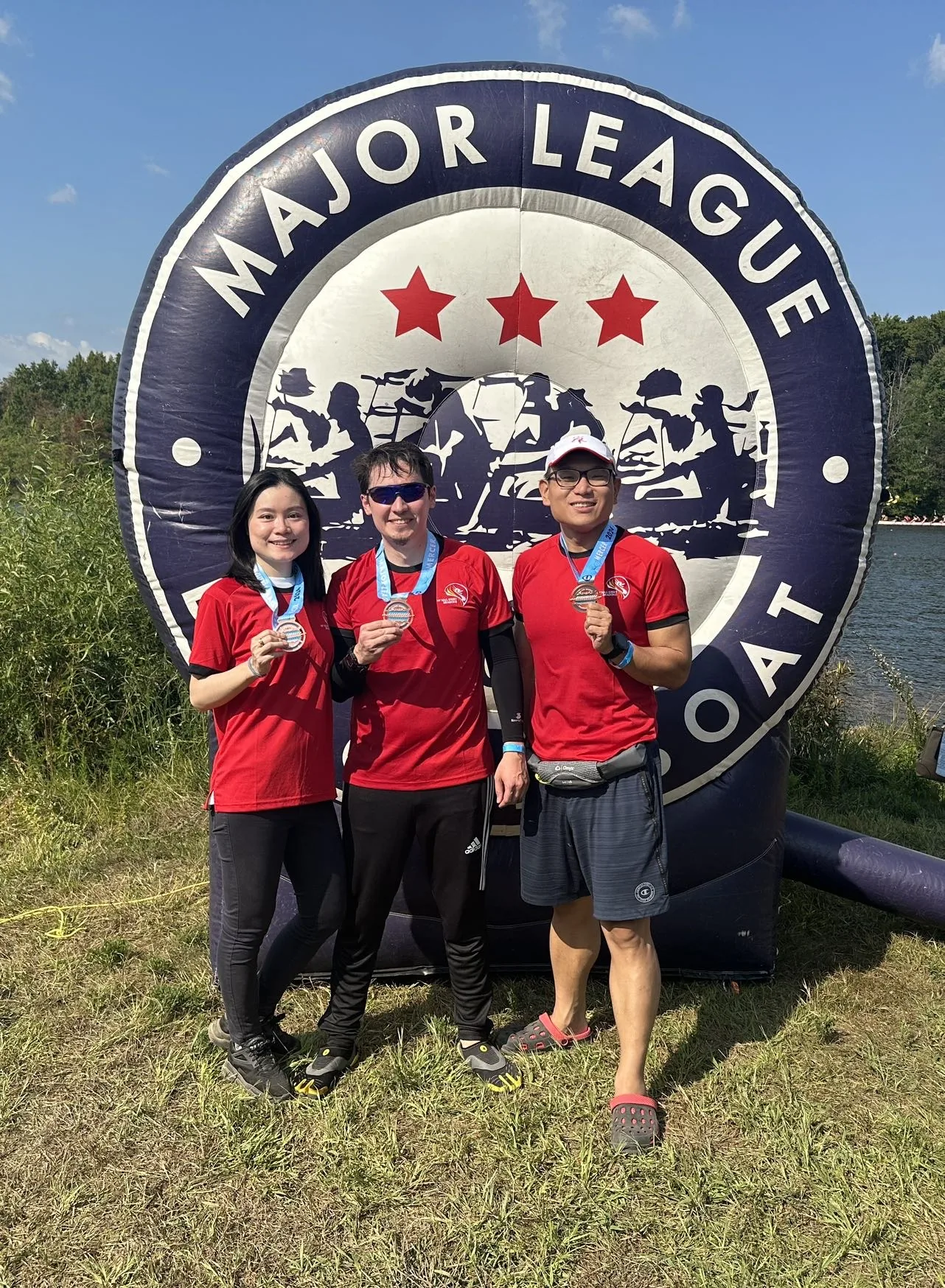
Three years ago someone asked me,
“Want to give it a try?”
In 2023, a friend asked whether I wanted to try dragon boat. I almost said no again.
Three years later, I realized I had started asking other people the same question: “Want to give it a try?”
By the end of September 2026, I had earned the RRCA Level I Coaching Certification: all requirements were complete and RRCA had sent its completion confirmation. The formal certificate file was still being processed.
That meant this was no longer just something I was registered for or planning to study.
I pursued it not because I think I’ve figured everything out. The opposite is true. The farther I go, the clearer it becomes that my own experience is only one sample.
If I really want to help other people, I should do it in a more structured and more responsible way.
That may be another change from the past few years: at first, I was mostly trying to solve my own problems.
Later I started asking: which parts only worked for me, and which parts might reflect something more general?
Don’t define other people too quickly.
And don’t define yourself too quickly either.
In May 2023, I was around 250 pounds. At my first dragon-boat practice, I did not even bring water. During my first 5K, every water station felt personally relevant.
Then one day I caught myself wondering, “Why is someone stopping for water at the first station?”
And then I remembered:
Oh. That used to be me.
I cannot control every outcome. Injuries, weather, work, randomness—reality is not going to follow my preferred script forever.
But I can get better at controlling inputs, reading feedback, and adapting faster when reality changes.
Looking back, there was never one day when I suddenly changed from “a person using willpower” into “a person with a system.”
It was more like these stories kept stacking up until I finally noticed that I had been repeating the same kind of process.
Try.
See what happens.
If it works, keep going.
If it does not, figure out why.
If the conditions change, adjust.
Then go again.
Stay with it long enough, and every so often test a boundary that used to feel out of reach.
If I had to compress it into one line, it would be:
Action → feedback → reflection → adjustment → action again.
Willpower still matters. I just no longer ask it to do the entire job by itself.
Most real change does not begin with anything dramatic.
Sometimes it begins with one sentence: “I guess I’ll give it a try.”